Allen Ginsberg arrived on the American poetry scene from Newark, New Jersey, with a formation in modern letters that combined classroom study and intense friendships formed at Columbia University; those early ties with Jack Kerouac, William S. Burroughs, and Neal Cassady helped shape the circle later labeled the Beat movement, and Ginsberg’s first wide notice sprang from a single, public act of reading that rippled outward into print and legal contest.
The poem Howl — written in the mid-1950s and first read at the Six Gallery event in San Francisco in October 1955 — was taken into print by Lawrence Ferlinghetti at City Lights Books in 1956; that publication provoked official seizure of imported copies and led to arrests of the bookstore manager and Ferlinghetti himself. The ensuing municipal prosecution focused on whether the book could be judged obscene under the law; after testimony by literary experts and a scrutinizing opinion by the court, the presiding judge concluded in language that has been repeatedly cited since: “I do not believe that ‘Howl’ is without redeeming social importance.” That ruling cleared the publisher and established a legal standard protecting works that possess even limited literary or social worth, and the trial’s publicity widened public attention to both the poem and the questions it raised about expression and censorship.
Observers who were there and participants afterward wrote and spoke about the case in ways that illuminate the people involved and their motives: Ferlinghetti reflected on the episode in later interviews and recordings with civil liberties advocates, often noting that the state’s reaction had less to do with a handful of coarse words than with the poem’s critique of mid-century conformity; as he put it in a recorded talk preserved by the ACLU, “It is not the poet but what he observes which is revealed as obscene.” That public defense by a small, independent press and its founder framed the trial as a contest over the civic space for frank, direct testimony in art.
Ginsberg’s circle was both literary and itinerant: his friendships with Kerouac and Burroughs and his companionship with Peter Orlovsky were part of a web that mixed collaborations, long conversations, and cross-continental travels; the Six Gallery reading itself produced quick, decisive publisher interest — a telegram from Ferlinghetti asking for the manuscript is part of the small, well-attested lore around the poem’s first publication — and from that moment Ginsberg’s vocation as reader, correspondent, and public poet intensified. His work kept drawing him into debates and gatherings, and his appearances and publications after the mid-1950s show steady activity across readings, journals, and small presses.
Across the 1960s and afterwards, Ginsberg moved between poetry and political engagement: he composed and circulated anti-war texts such as Wichita Vortex Sutra and advocated public tactics for protest that emphasized open, affirmative spectacle; the phrase “flower power” is commonly traced to Ginsberg’s efforts in the mid-1960s to convert demonstrations into scenes that dramatized peaceful protest. He also turned toward institutional teaching and formation, co-founding the Jack Kerouac School of Disembodied Poetics with Anne Waldman at Naropa in Boulder in 1974, which became a sustained site for workshops, readings, and cross-disciplinary exchange.
Music and performance were recurring partners for his readings: in the late 1980s and into the following decades he worked with Philip Glass on an extended project that became the theatre piece Hydrogen Jukebox, and across years of recorded readings Ginsberg brought musicians into his sessions and albums — names that appear on those records include Bob Dylan and Paul McCartney among others — which placed his spoken voice into settings shaped by accompaniment and studio practice. As Glass remembered of their early encounter, “I happened to run into Allen Ginsberg at St. Mark’s Bookshop ... I composed a piano piece to accompany Allen’s reading,” a small exchange that grew into a multi-part music-theatre work.
Ginsberg’s engagement with Eastern devotional currents: he joined the public chanting led by A.C. Bhaktivedanta Swami Prabhupada on more than one occasion, most famously at street and park gatherings in New York that introduced many passersby to public kirtan in the mid-1960s; a widely noted episode on October 9, 1966 in Tompkins Square is often cited as an important early moment in the movement’s public presence in the city, and multiple transcripts and recordings record conversational moments between Ginsberg and Prabhupada in 1969 where Ginsberg joins or echoes the formula Hare Kṛṣṇa.
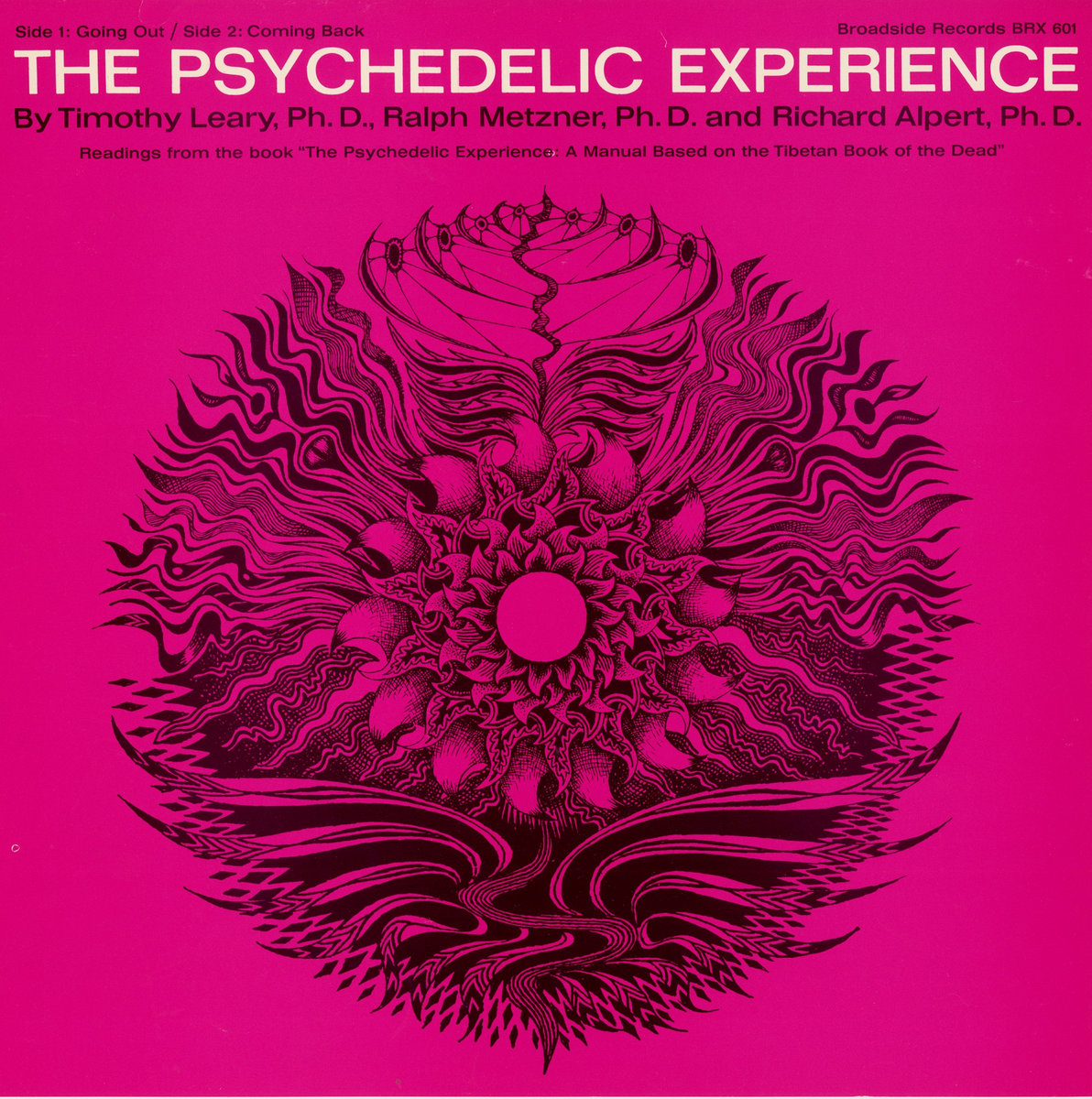
Timothy Leary’s approach to what he called “shamanism” was not an attempt to claim lineage from Indigenous ritual specialists but an effort to translate certain procedures and metaphors from Tibetan and other sources into a set of modern, repeatable practices for navigating altered states of consciousness. From his first work at Harvard in the early 1960s through the itinerant projects and communes of the later decade, Leary and his close collaborators framed psychedelic use as a technology for guided transformation: psychedelic substances were tools that could open neurological and psychological pathways, while structured preparation, ritual readings, music and a controlled environment served as the safeguard and map for those passages. This hybrid stance—ritual form married to pharmacological means—was made explicit in the manual he co-authored with Richard Alpert and Ralph Metzner, The Psychedelic Experience (1964), where the authors rework material from an English adaptation of the Tibetan Bardo Thodol into step-by-step psychonautic directions and practical coaching cues designed for guided sessions.
Leary treated LSD and related compounds as instruments for eliciting the kinds of visionary states that shamanic cultures describe, while insisting that the chemistry alone was not sufficient. He wrote that the dose “opens the mind, frees the nervous system of its ordinary patterns and structures,” and from that premise constructed protocols for preparation, helpers, and guides to hold the participant through frightening, ecstatic, or bewildering material. His insistence on set and setting—the internal mood of the participant and the surrounding cultural, social and physical context—was an attempt to translate the safeguards built into many ceremonial systems into a form that Western clinicians and seekers could use. In practice that meant scripted readings, the presence of trusted guides whose job was to remind, soothe and direct, and a musical and visual architecture for the session; the manual and associated recordings and performances were intended as the “road maps” for a rite of passage into ego-dissolution and re-emergence.
That translation project—explicit, unapologetic, and sometimes clumsy—had several concrete, traceable consequences. In the early 1960s Leary’s Harvard Psilocybin Project moved experimental work beyond clinical observation into experiential coaching with artists, poets and volunteers; Allen Ginsberg’s early collaboration and enthusiastic public support helped move the project into literary and countercultural circles, and Leary’s partnership with Richard Alpert and Ralph Metzner produced the manual that became a touchstone for many Western psychonauts. The authors’ method reframed the death-and-rebirth metaphors of the Tibetan text as a usable mechanism for confronting and integrating the ego-dissolution that can occur under psychedelics: your guide recalls fragments of the manual during experience, the group offers a steady presence, and the language of bardos provides orienting images for what might otherwise be terrifying visions. This is not the same as apprenticeship in a living shamanic lineage; Leary acknowledged that his method was a Western, modernist attempt to systematize what he perceived as universal stages of transition, and many scholars and critics have later stressed how reductive that move could be when severed from cultural context.
A concrete institutional outlet for Leary’s framing was the Zihuatanejo project and the Millbrook gatherings—sites that functioned as experimental temples where rituals, music, readings, and drug-assisted sessions were combined into communal training, rehearsal and performance. These were not private, secret rites in the Indigenous sense; they were scheduled, documented, and in many cases commercialized as weekend retreats or training sessions. Records from Zihuatanejo and Castalia/Millbrook detail day-by-day schedules, recommended dose ranges, and a theatrical program for “voyages” in which music and spoken guidance were used to shepherd participants through stages of ego-loss and reintegration. Those experiments shaped Leary’s public image as an organizer of guided, quasi-liturgical events and fed directly into the League for Spiritual Discovery, which he launched in 1966 as an attempt to consolidate psychedelic work under the banner of a religious organization and to argue for sacramental status for LSD.
At Millbrook the careful staging of sessions and the emphasis on controlled interpersonal dynamics were combined with an ethos that resembled ritual households in other cultures: the estate hosted readings, guided meditations, music, and social choreography intended to maximize the chances that a participant would pass through frightening imagery and re-emerge with coherent insights. Rosemary Woodruff Leary—often overlooked until recent biographies—was central to creating the atmosphere and the practical care that sustained these sessions; her role in training others in the art of set and setting has been documented in archive material and in contemporary biographies that reconstruct Millbrook’s social operations. What Leary and his circle practiced in Millbrook was often closer to staged initiation than to ethnographic reproduction, and when local authorities moved against the estate it was partly because those public experiments blurred the line between clinical study and mass evangelism.
Leary’s use of the Tibetan Book of the Dead was an explicit case study of how he borrowed religious content and repurposed it as a serviceable program. The manual’s structure, the bardo phases and the scripts for calming and guiding a dying consciousness were reconfigured into pre-session readings and intra-session prompts; recordings and issued scripts were used as liturgy. At the same time, scholars such as Donald Lopez have documented how the English translations and popular editions available in the West—especially the version popularized by Evans-Wentz—carry interpretive layers that reshape Tibetan concepts to fit Western esoteric categories. Leary’s adaptation leaned heavily on those English renderings and on a Western psychological vocabulary, which made the material usable in Leary’s workshops but also opened him to charges of misrepresentation and cultural extraction. That tension between practical uptake and scholarly fidelity is central to understanding why some theologians and area specialists criticized the project even as poets, musicians, and many participants embraced it.
Leary’s public rhetoric and theatricality had major political consequences. His high-profile exhortations—expressed in slogans and in staged “celebrations” such as the League’s events—helped make psychedelic practice visible beyond academic circles, and that visibility provoked legal and political reactions that culminated in harsh criminalization, raids on Millbrook and allied sites, and his own long entanglement with the courts. Local prosecutions and federal cases produced headlines and spurred a moral panic in which the practices Leary promoted were reframed in many quarters as social menace. The legal pressures escalated into arrests, trials and a period of fugitive life after his 1970 escape from a California prison with the help of underground networks; the story of escape, exile and re-capture became part of Leary’s public mythos and of the broad social contest over who could claim authority to teach altered-state techniques in America.
The practical materials Leary produced—manuals, recordings, and ritual scripts—were distributed in many forms. The original Psychedelic Experience manual was circulated in paperback and in classroom settings; Folkways and other labels released spoken-word records that presented readings and guided meditations intended for use during sessions; and Castalia Foundation and related journals published protocols and reports that show how Leary and his circle attempted to standardize what they saw as rites of passage. These artifacts make clear that Leary’s world was not just talk: he built instruments, procedures and a small industry of training and publishing to accompany his model of guided psychedelic session work.
There are important cross-currents in Leary’s personal alliances and the ways artists and producers absorbed his work. Poets and Beats like Allen Ginsberg were not only friends but active collaborators who experimented with readings and public events; Ginsberg wrote in a contemporaneous piece that “Dr. Leary conducted himself fairly & equitably, given the extremity of his knowledge,” a judgment that records how some first-hand witnesses read Leary’s courage and experimental method. Musicians found the manual directly actionable: the opening line that John Lennon lifted into Tomorrow Never Knows—“turn off your mind, relax and float downstream”—came from the Leary/Alpert/Metzner text as an English-language guide for navigating the first bardo, and that textual borrowing was acknowledged by the band’s members and chroniclers. The circulation between poets, gurus and pop artists made Leary’s versions of ritual part of a wider cultural movement in which music, guided readings and sensory staging were combined to manufacture a controlled encounter.
At the same time, respected interlocutors such as Alan Watts offered cautionary counsel: Watts framed psychedelic compounds as useful instruments that should not become permanent crutches for spiritual practice, counsel captured in his oft-quoted admonition, “When you get the message, hang up the phone,” a line emphasizing that chemical states should be integrated into disciplined practice and not glorified as final ends in themselves. That voice—calling for integration and discipline rather than perpetual intoxication—underscored a split that ran through Leary’s circle between experimental intensity and long-term contemplative grounding.
Peggy Caserta arrived in San Francisco from Louisiana in the mid-1960s with a mixture of restlessness and an eye for clothes, and by opening the boutique Mnasidika on Haight Street she inserted herself into a small set of people who converted local styles into wider trends. Born in 1940 and later a public figure in accounts of San Francisco’s countercultural quarter, her life has been written about in obituaries and profiles that line up the basic biographical facts — her move from work at Delta Airlines to running a shop at 1510 Haight, her long friendship and romantic relationship with Janis Joplin, her later struggles with addiction, the two memoirs she published and the fact of her death in late 2024 — all of which frame a life that threaded commerce, scene life and caregiving in ways that make the Haight story legible.
The boutique she opened in April 1965 was small, billed at first as an inexpensive storefront around the Doolan-Larson building, but it quickly developed the pattern that would knot place and style together: a physical window and counter where musicians, road crews, poster artists and local scenesters met, where concert tickets and posters were circulated, and where improvised clothing changes could be purchased or commissioned. Contemporary chroniclers and preservation accounts point to 1510 Haight as the precise address and to Herb Greene’s photography and other documentary images as the primary visual evidence that the shop had, in a very short time, become part of the street’s public identity.
Peggy Caserta with her lover Janis Joplin.
The choice of the name Mnasidika was not accidental; Caserta and those around her referenced queer literary echoes and small-circle codes that made the shop more than a commercial point of sale. Scholars of Haight culture and community historians have argued that that naming practice signalled a queer-friendly, woman-run space at a moment when such spaces were scarce, which meant the boutique served as both sartorial vendor and an implicit social site for non-normative identities. That coded quality matters because it helps explain why women and queer people found the shop welcoming, and why musicians and scene people felt free to hang out there as much as buy garments.
When Peggy Caserta opened her boutique at 1510 Haight Street in San Francisco's Haight-Ashbury district in 1965, she chose a name that resonated with both historical and personal significance. The name "Mnasidika" is derived from the character Mnasidika in the ancient Greek poem The Songs of Bilitis, a collection of lesbian poetry attributed to the Greek poet Sappho. This choice was not merely an aesthetic decision but a deliberate act of reclaiming and celebrating queer identity during a time when such expressions were often marginalized.
What actually happened inside those four walls is crucial to the story that follows: customers wanted a wider leg to their denim so boots would fit and movement would look better on stage and on the street. Local seamstresses — originally Caserta’s mother among them and then others in the Haight network — began manually splitting seams and inserting triangular panels of paisley or denim to create a flared silhouette. Those do-it-yourself modifications were the practical seed of what would be called bell-bottoms: garments altered in a workshop, offered for sale in a shop window, tried on by touring and local musicians, and photographed at their haunts.
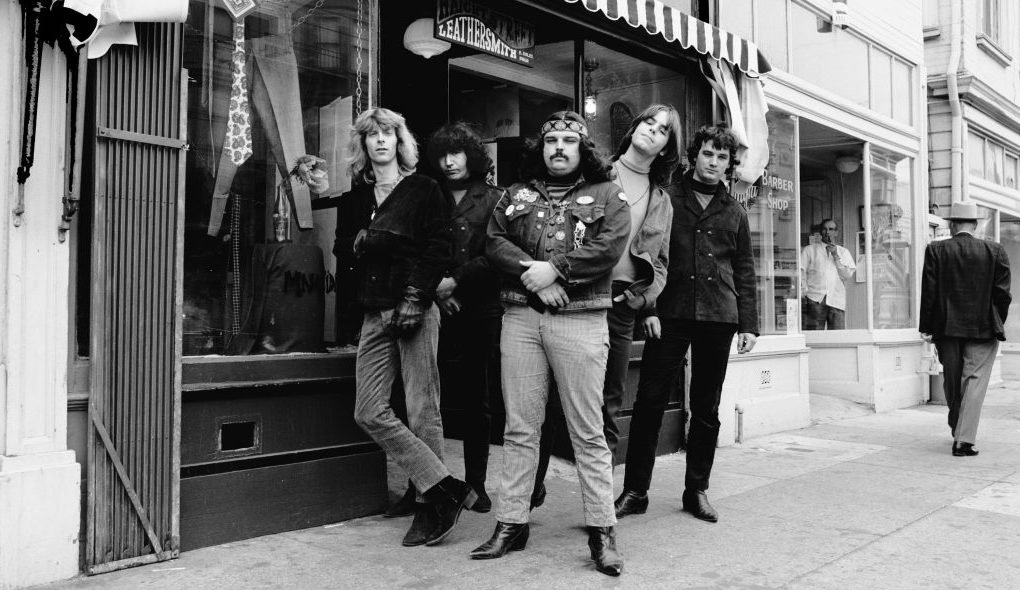
Grateful Dead in the storefront of Peggy's Mnasidika.
When demand for those modified Levi’s outstripped what one seamstress could produce by hand, Caserta famously took the matter to the factory. Her account — told in interviews she gave later and quoted by company historians — describes a visit to a local Levi Strauss location, a sympathetic older employee who remembered Levi Strauss himself, and an initial small run of flared jeans made on credit so the shop could sell an exclusive line for roughly six months. That hand-to-factory bridge is where the story moves from boutique anecdote to industrial replication: Levi’s went on to issue styles like the 646 Bell Bottom in 1969, and corporate histories now trace that model line back to the Haight’s demand for a flare that would fit the new dress code of stage and street.
The social side of the shop — musicians walking in, crews loitering, the sale of posters and the general interchange of tastes — was essential to the diffusion vector that made a local hack into a visible trend. Bands such as Grateful Dead and performers in Jimi Hendrix’s circle were photographed in front of the boutique, and stage visibility from such groups made the silhouette more legible to magazine editors and fashion photographers; those images were then reproduced and circulated. The shop’s function as a hub also included less formal commerce: word-of-mouth introductions, ticket distribution and an atmosphere in which styles were tried on and broadcast from the stage back into the street. The store’s role, therefore, was not only retail but social throughput — a place where fashion, friendship and scene logistics met organically.
The presence of Janis Joplin in that story accelerated visibility. Caserta’s accounts, and multiple profiles that draw on her memoirs and interviews, place Joplin at Mnasidika as a customer and friend at a point when the singer could not always afford new clothes; Caserta has described the exchange in casual terms that underline how small, local gestures fed into larger public moments. “We joked that we met over a pair of Levi’s,” Caserta said in an interview. Caserta’s closeness to Joplin — friendship, love and public association — meant the garments she sold were onstage and backstage at high-profile shows, and that in turn multiplied their visibility beyond Haight Street.
Addiction and later recovery appear as recurring elements in Caserta’s life story, reported by multiple outlets and discussed in her later interviews. Her path includes prison time, arrests in various jurisdictions and, eventually, a turn toward recovery and caregiving: she spent years looking after her mother and later moved away from San Francisco. Those human elements have been foregrounded in obituaries and recollections in a way that treats the Haight era as a complicated human history of risk, care and reinvention rather than a simple heroic chronicle.
The bell-leg silhouette itself did not end with the 1970s; it has recurred in fashion cycles in recent decades and continues to be reworked on runways and in street wear. Company retrospectives and fashion reporting note periodic revivals and reinterpretations, which demonstrates the style’s ongoing commercial plausibility; what began as a Haight street modification now participates in recurrent design cycles that reach a global consumer base.
The bellbottom style resurfaced with distinct shapes in later decades: in the 1990s, rave culture embraced oversized phat pants from brands like JNCO and Kikwear, engineered with wide hems and cargo-scale pockets that suited marathon dance sessions and stood out in strobe-lit spaces. During the early 2000s, the Y2K pop mainstream reintroduced low-rise flares through celebrity wardrobes and music videos, a return amplified by resale markets and fast-fashion copies. In each wave, the cut was altered — from denim bells to rave-ready extremes, then to tailored pop silhouettes — showing how the garment adapted to new demands rather than simply repeating past forms.
Later revivals highlight the style’s versatility within specific subcultures. Psytrance and Goa scenes throughout the 1990s and 2000s retained flared trousers for their functionality at outdoor festivals, while European techno hubs, especially Berlin, often steered in the opposite direction toward dark, narrow fits. By the 2010s and 2020s, high-fashion runways, resale platforms, and celebrity performances revived flares again, producing modernized designs with reinforced hems, stretch fabrics, and adjusted rises to balance practicality with editorial appeal.
On the night of 29 April 1967, the Great Hall of Alexandra Palace became the stage for one of the most ambitious undertakings of London’s countercultural scene: the 14-Hour Technicolor Dream. It was not designed as a simple concert but as a multi-layered demonstration of artistic independence and political solidarity. Organised on short notice by figures such as John “Hoppy” Hopkins, Barry Miles, Mike McInnerney, David Howson and Jack Henry Moore, the event’s immediate purpose was to support International Times, the underground paper that had been raided by police earlier that spring. The raids, which involved confiscating thousands of copies, gave urgency to the idea of turning music, art and performance into a collective stand for free expression.
The identity of the event was announced even before it began through its striking poster, designed by McInnerney and printed by Osiris Visions. Each print came out differently due to a two-ink process that blended colours in unpredictable ways, so no two posters looked the same. This variability has made the surviving examples into essential artefacts for historians, since they provide a rare fixed point in reconstructing the event’s roster. The poster included names that spanned emergent psychedelic groups, rhythm and blues veterans and experimental performers, emphasising a deliberate broadness that sought to draw as many cultural circles together as possible.
Inside Alexandra Palace, the Dream unfolded as a hybrid experiment. Two large stages and a smaller central one kept performances running almost without pause. Between musical sets came poetry, performance pieces and experimental theatre, while the vast hall itself was turned into a constantly shifting environment. A towering lighting rig sent liquid projections and film loops across the glass interior, and installations including a fairground helter-skelter added to the sense that the space itself had become part of the performance. „It was like a Bat-Signal telling the freaks to come out … Hoppy and Dave had organised searchlights to direct at the clouds, like a big Hollywood premiere, and they could be seen all over London. That was impressive.” (Barry Miles, source)
The music carried equal weight. Groups like The Soft Machine, The Move, The Pretty Things, The Crazy World of Arthur Brown and Savoy Brown were among those scheduled, joined by veterans such as Alexis Korner and Champion Jack Dupree. This mixture placed fledgling psychedelic ensembles alongside seasoned blues musicians, making the Dream a deliberate cross-generational gathering. However, the very ambition of presenting so many acts in a single continuous event created confusion. Eyewitnesses have admitted that timelines blurred in the haze of lights, fatigue and substances circulating through the crowd. For that reason, definitive setlists remain elusive, but the evidence points to one enduring certainty: Pink Floyd performed near dawn, closing the gathering as sunlight crept through the glass. According to multiple archives, their set included Astronomy Domine, Arnold Layne and an extended Interstellar Overdrive.
The presence of John Lennon, arriving with John Dunbar, further magnified the cultural resonance. Though not advertised, his appearance in the audience was widely reported, and it underscored the permeability between London’s underground and the mainstream. The Dream was also marked by experimental interventions such as Yoko Ono’s performance work, which unsettled the boundaries of stage and audience. Together, these appearances reinforced the Dream’s character as both concert and living gallery of avant-garde art.
The technical experiment of scaling club aesthetics into the immense space of Alexandra Palace was daring but fraught. Liquid-light projectors and film loops that worked effortlessly in intimate venues had to be amplified dramatically to fill the cavernous hall, producing moments of brilliance but also uneven results for sections of the audience. Sound bleed, distorted echoes and shifting sightlines reflected the challenges of repurposing civic space for experimental culture. Stagehands and riggers faced daunting tasks in keeping the equipment running, and their improvisation became as crucial as the performers on stage.
Financially, the Dream was a paradox. It succeeded spectacularly in generating attention for International Times and for the underground as a whole, but it left organisers exhausted and uncertain about the balance sheet. The cost of hiring the hall, equipment and security outstripped parts of the revenue, leading some to describe the outcome as chaotic from a managerial standpoint. Yet this very chaos has become part of its aura. "The 14 Hour Technicolor Dream was a big event and a financial disaster. Most people were on drugs of one sort or another. It was a crest of a wave. It wasn’t fully understood, but it was a landmark event." (John Hoppy Hopkins, source1, source2)
Documentation of the Dream is fragmentary. Peter Whitehead’s film crew recorded parts of the night, with extracts folded into Tonite Let’s All Make Love in London. While invaluable, this film is selective, edited to present a montage of Swinging London rather than a faithful record of the Dream itself. Surviving posters, tickets and issues of International Times remain essential sources. Oral histories with musicians and organisers add colour but also contradictions: crowd estimates range from a few thousand to more than seven thousand, while memories of exact running orders vary widely.
In the decades since, the Dream has been celebrated in anniversary programmes, remembered in exhibitions at institutions such as the ICA, and re-examined in countless retrospectives. Collectors prize the posters and tickets as material links to a moment when experimental art converged with political urgency. But historians caution against smoothing over the contradictions: the Dream was chaotic, messy and improvisational, as much about testing limits as producing polished outcomes.
On January 14, 1967, San Francisco’s Golden Gate Park became the stage for an event that has since been remembered as both a symbolic and material starting point of the countercultural tide of that year. The Human Be-In, organized by local activists and artists, was conceived as a public manifestation of the ethos that had been growing within the Haight-Ashbury district. It was neither a concert in the conventional sense nor a protest in the direct political style, but something in between, combining music, communal gathering, spirituality, and statements of cultural defiance. This was the moment when underground ideas suddenly took visible form in front of tens of thousands of people.
The location was the Polo Fields of Golden Gate Park, chosen for its centrality and accessibility. Estimates of attendance vary between 20,000 and 30,000 people, though many who were present described the sensation as one of standing within a sea of humanity, where exact numbers seemed irrelevant. The term Be-In was coined as a play on the protest term sit-in, used by civil rights activists earlier in the decade. Rather than occupying a space to demand policy change, those attending were encouraged simply “to be,” to celebrate presence, consciousness, and collective participation.
A wide range of personalities contributed to the atmosphere. Allen Ginsberg, whose chanting and presence linked the event to the Beat tradition, described the day as “a chance for people to see themselves, not as outcasts, but as part of a family.”. Gary Snyder and Michael McClure, poets equally involved in merging ecology, spirituality, and art, spoke to the crowd, lending a literary and reflective quality. Timothy Leary, who had become famous for his advocacy of LSD experimentation, took the stage and delivered his now-iconic mantra: “Turn on, tune in, drop out.”.
Observers recall that Leary did not attempt long sermons or philosophical exposition. He chose instead to compress his thought into a formula that could be easily remembered. Standing before thousands, he declared “Turn on, tune in, drop out.” The brevity of that statement was itself an act of theatre. In a setting crowded with amplified music, incense, and the drone of conch shells, the phrase arrived as a clear note amid the clamor. Those present describe a surge of energy sweeping across the audience when he uttered it. One participant later remarked, “You could feel the field shift when Leary spoke—everyone leaned forward as if waiting for some key to the moment.”
Musically, the day featured several key groups of the San Francisco scene. The Grateful Dead, Jefferson Airplane, and Quicksilver Messenger Service all performed free sets, blending into the overall improvisational flow of the gathering. These bands were already central in the Haight, and their presence at the Be-In affirmed the sense that the music of the community was inseparable from its social vision. Country Joe and the Fish also played, further bridging the connection between folk protest and psychedelic experimentation. The staging was minimal—there were no barriers, no commercial concessions, and no structured ticketing. Amplifiers sat on flatbed trucks, and the music rolled out into the open air.
Alongside the performers were political and social activists. Members of the San Francisco Oracle collective, which had been producing the underground newspaper Oracle, helped organize the event. Representatives of the Diggers, who promoted free food and anti-commercial values, were present, distributing refreshments and embodying their principle of a gift economy. Members of Native American tribes were also included, bringing drums and rituals that underscored both cultural diversity and an invocation of spiritual continuity.
Those attending engaged in multiple activities simultaneously. Some meditated, some danced, and others simply sat together, conversing with strangers. There was widespread sharing of food and substances, creating a sense of openness and leveling of social barriers. A participant later remembered: “It felt like the whole city had agreed, just for that afternoon, to breathe together.”. The event became a rehearsal for the larger gatherings of the Summer of Love later that year, particularly the Monterey Pop Festival, but the Be-In retained a quality of spontaneity and innocence.
The press coverage varied. Some mainstream outlets described the gathering as a curiosity, a cultural spectacle, while others dismissed it as aimless. Yet underground media saw it as a decisive affirmation that the Haight counterculture was not a fringe, but a genuine social force. Scholars later identified the Human Be-In as one of the first public mass expressions of the new “hippie” identity, situating it historically alongside earlier Beat gatherings but amplified by the new psychedelic ethos.
As for its cultural role, the Be-In crystallized several strands: the Beat inheritance of poetry and spontaneous performance, the psychedelic experimentation encouraged by Timothy Leary and others, the music scene emerging from San Francisco ballrooms, and the political activism carried forward from civil rights and antiwar movements. Each of these was given equal stage, and the absence of hierarchy or commercial structuring reinforced the sense of communal experiment. It was less a concert than a living demonstration of a possibility.
By the end of the day, the park had been left in relative peace, and many remembered the gathering as surprisingly harmonious for its size. In retrospect, the Human Be-In became emblematic of the moment just before mass media attention and commercialization transformed the Haight. It was at once ephemeral and historically significant: a day when, for those present, the ideals of community, creativity, and expanded consciousness were not abstract, but tangible in the air. Allen Cohen, editor of the Oracle and one of the central organizers, later said: “It was the first time the whole tribe had come together. We wanted to start the year with a clear sign. And for one day, we were all together, in the sun.”.
Timothy Leary remains one of the most polarizing and profound architects of the 20th century’s cultural and intellectual upheavals. His life’s trajectory defies simplistic categorization, embodying a relentless pursuit of expanded human consciousness amid the socio-political maelstrom of the 1960s and beyond. His work extended far beyond his emblematic phrase “Turn on, tune in, drop out,” reaching into realms of psychology, futurism, spiritual exploration, and radical cultural critique. To comprehend Leary’s impact requires immersion into the dense fabric of his personal writings, scientific experiments, philosophical treatises, and public performances, each a facet of his grand project to reimagine the boundaries of human experience.
Born on October 22, 1920, in Springfield, Massachusetts, Leary's early academic rigor culminated in a PhD in clinical psychology from the University of California, Berkeley, in 1950. His initial professional phase at the Kaiser Foundation Hospitals revealed an interest in psychotherapy and personality studies, but it was at Harvard University that Leary’s work would become epochal. Alongside Richard Alpert, later known as Ram Dass, Leary co-founded the Harvard Psilocybin Project (1960–1963), pioneering experimental research on psilocybin’s capacity to catalyze therapeutic breakthroughs and spiritual awakening. Their work inspired a wave of subsequent psychedelic research, despite institutional pushback that culminated in their dismissal amid allegations of ethical violations, including administering psychedelics to graduate students and undergraduates.
One of Leary’s most scrutinized ventures, the Concord Prison Experiment (1961–1963), sought to reduce recidivism among inmates through guided psilocybin sessions. Initial findings suggested a drop in re-offense rates from the Massachusetts average of 64% to as low as 20% among participants. However, subsequent critical reanalysis revealed methodological flaws and limited follow-up, raising enduring questions about the validity of the results. Still, the experiment underscored Leary’s conviction in psychedelics as agents of psychological transformation, asserting that liberation from ingrained behavioral patterns was possible by confronting consciousness at its core.
Leary’s rise coincided with the cresting wave of 1960s counterculture, which embraced experimentation, political rebellion, and new paradigms of selfhood. His charismatic appearances at events like the 1966 Trips Festival—attended by thousands in San Francisco—galvanized a generation eager for radical change. His relationships with cultural icons such as Allen Ginsberg, Aldous Huxley, and Ken Kesey’s Merry Pranksters amplified his reach. Yet Leary was more than a charismatic figurehead; he synthesized and expanded upon ideas from Carl Gustav Jung’s collective unconscious, Aleister Crowley’s Thelema, and G.I. Gurdjieff’s Fourth Way, weaving them into an intricate schema of human potential and evolutionary possibility.
His seminal theoretical contribution, the eight-circuit model of consciousness, first articulated in Neurologic (1977) co-written with Robert Anton Wilson and Antero Alli, posited eight sequential levels of neural function. These ranged from the terrestrial survival circuits dealing with physical safety and territoriality, ascending through emotional and symbolic circuits, culminating in the transpersonal and quantum awareness circuits where consciousness interfaces with cosmic and multidimensional realities. This model anticipated cybernetic and digital frameworks of the brain, foreshadowing the eventual integration of neuroscience and information technology in understanding mind and identity.
The archive of Leary’s personal correspondence housed at the New York Public Library provides an unparalleled window into his psyche during incarceration at Folsom Prison (1972–1976), a period that profoundly shaped his later thought. His letters to Joanna Harcourt-Smith are suffused with metaphysical longing, affection, and mythic symbolism, referring to her as “beloved wise woman” and “infinity swirl.” These missives entwine tender emotional confessions with schematic elaborations of his SMI²LE doctrine—Space Migration, Intelligence Increase, and Life Extension—a futurist blueprint for human transcendence. This visionary framework envisioned humanity not only overcoming earthly confines but evolving through technological augmentation and cosmic dispersal, reflecting his conviction that survival hinged on expanding both mind and lifespan.
Leary’s futurism was grounded in vigorous engagement with contemporary scientific discourse. His interactions with luminaries such as Carl Sagan reveal a striking dialectic between utopian aspiration and empirical skepticism. When Leary petitioned Sagan for support to launch a rocket to facilitate space migration, Sagan responded pragmatically that such an endeavor would require a minimum of $300 billion, highlighting the chasm between visionary speculation and fiscal reality. This exchange exemplifies the tensions inherent in Leary’s work: the oscillation between radical imaginative projection and the constraints of existing scientific and political frameworks.
In writings like Starseed and Terra II, Leary articulated an often unsettling cosmology, blending elements of genetic refinement, cosmic destiny, and eugenic-like selective evolution. His assertion that humanity could become a “species of spacefaring homo superior” gestures toward a future where genetic and cognitive engineering enable transcendence of current biological limitations. These ideas, while criticized for their elitist undertones, reveal Leary’s intense preoccupation with evolutionary acceleration as both a spiritual imperative and scientific challenge. His conceptual universe positions human beings as nascent star voyagers, whose destiny lies beyond terrestrial bonds.
Leary’s embrace of emerging media and technology further shaped his vision of consciousness as programmable circuitry. Influenced by Marshall McLuhan’s media theory, Leary viewed electronic communication and computing as extensions of the human nervous system, prefiguring the networked and virtual realities of the digital age. He famously claimed, “The PC is the LSD of the 1990s,” articulating his belief that technology could catalyze new modes of perception and social organization. His early collaborations with futurists such as Timothy Leary’s participation in the 1984 documentary Cyberpunk and connections to Silicon Valley pioneers like Stewart Brand reinforced his reputation as a bridge between psychedelic counterculture and nascent technolibertarianism.
Leary’s fraught relationship with authority underscores his biography. The FBI’s extensive surveillance and legal prosecutions, documented in thousands of pages of declassified files, reveal a government determined to neutralize what was perceived as a subversive influence. His multiple arrests and prison sentences—most notably his 1970 escape from the California Men’s Colony and subsequent flight aboard the ‘Excalibur’ yacht—became legendary, underscoring his mythic status as a rebel and fugitive. Archivist Michael Horowitz’s steadfast defense of Leary’s personal papers during government seizure attempts in 1975 preserved crucial artifacts of his intellectual odyssey, symbolizing the fight to safeguard alternative histories against erasure.
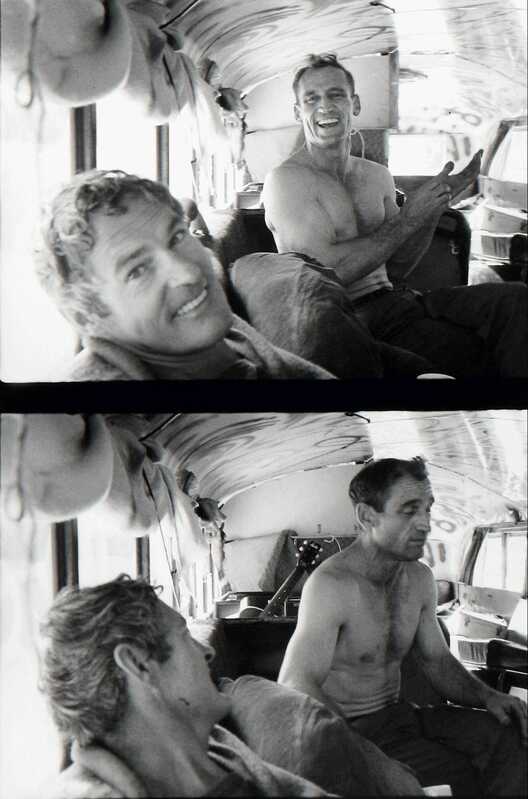
...feat. Timtohy Leary (right in front of the bed and later together with the others in the bed).
Leary’s intersection with music and art further expanded his cultural imprint. His associations with figures such as John Lennon and Yoko Ono, who invited him to the 1967 Human Be-In in San Francisco, intertwined his message with the era’s sonic revolutions. The Beatles’ song Tomorrow Never Knows, heavily influenced by Leary’s encouragement to embrace Eastern philosophy and psychedelic experience, stands as a landmark moment linking Leary’s ideas to popular culture. Similarly, his presence in films such as The Merry Pranksters documentary and appearances in underground cinema reflected his enduring engagement with artistic experimentation and public discourse.
Critiques of Leary’s scientific rigor remain significant. The Concord Prison Experiment’s methodological limitations and the speculative nature of his eight-circuit theory have invited skepticism within mainstream neuroscience and psychology. Yet, to focus solely on these criticisms is to overlook the broader intellectual terrain in which Leary operated—a milieu suffused with uncertainty about consciousness itself, where experimental boldness was necessary to probe the unknown.
Leary’s own reflections are imbued with mythic resonance. He perceived himself not only as a psychologist or countercultural leader but as an alchemist of perception, a modern shaman whose tools were chemical catalysts and linguistic incantations. His writing oscillates between scientific exposition and poetic metaphor, aiming to activate both analytic and intuitive faculties. The mythopoetic quality of his thought served as both a strategy for transmission and a reflection of his profound conviction that human evolution is a conscious, creative act.
The Mod subculture that flourished in postwar England, primarily from the late 1950s through the mid-1960s, stands as a remarkable example of youth agency within a socioeconomically constrained environment. More than just a fleeting fashion trend, it was an articulate form of cultural self-determination that channeled class frustration and aspiration into a meticulous aesthetic and social code. Central to the Mod phenomenon was a generation of working-class youths, largely from London, the Southeast, and other industrial towns, whose median age hovered around 17 to 22 years. Statistical estimates by social historians such as Paul Willis suggest that by 1964, there were upwards of 40,000 active Mods across Greater London alone, a number that swelled significantly in urban centers such as Manchester and Birmingham. This demographic was primarily composed of semi-skilled laborers, factory workers, and those employed in the burgeoning service sector — professions that, while offering stability, lacked opportunities for upward mobility. The Mods’ sophisticated sartorial choices thus constituted an act of economic defiance and social aspiration.
One cannot overstate the precision with which Mods curated their appearance. The hallmark was a sharply tailored look inspired by Italian and French fashion houses, featuring clean lines, narrow lapels, and trousers with a minimal break. Brands like Fred Perry, Ben Sherman, and Dr. Martens boots became signifiers of insider status. According to interviews collected by cultural anthropologist Ken Gelder, Mods would invest up to 20% of their disposable income on clothing, tailoring, and accessories—an expenditure that contrasted sharply with the modest incomes they earned. This investment in style extended to grooming; haircuts were geometric and often styled with pomades, as exemplified by the iconic “Bowl cut” or “Short back and sides.” The Italian Vespa and Lambretta scooters were ubiquitous, not only as practical conveyance but as canvases for self-expression, often decked with mirrors, badges, and custom paint jobs, a phenomenon documented extensively in Paul Anderson’s photographic archive of 1960s youth culture.
Musically, Mods forged a connection that transcended the Atlantic, aligning themselves with African American rhythm and blues, Motown soul, and Jamaican ska. The soundtracks to their nightlife included artists such as The Small Faces, The Who, Marvin Gaye, and Desmond Dekker. The adoption of rare imports was not mere affectation but a conscious cultural alignment; as Dave Haslam articulates in Life After Dark, “the selection of a rare Motown 45 was a statement of cultural discernment and kinship with urban black music scenes across the ocean.” The all-night club scenes at venues like the Twisted Wheel in Manchester and The Scene in Soho functioned as crucibles for this transnational exchange, often attracting crowds exceeding 1,500 attendees. DJs like Gus Stewart and DJ Wedge gained legendary status for their ability to procure and spin elusive records, cultivating a musical milieu that fostered a collective sense of identity and belonging.
Even before they became famous as The Who, they released this song specifically for the Mod scene – “face” was slang for a respected Mod. The single was promoted through a targeted advertising campaign in Mod clubs and captures the movement’s self-image both musically and lyrically with great precision.
Drug culture, while not the central focus of the Mods, played a notable role in their nocturnal practices. Amphetamines, known colloquially as “purple hearts,” were widely used to sustain energy and focus during the often marathon all-night dances. Studies by sociologists such as Phil Cohen estimate that nearly 40% of active clubgoers in London’s Mod scene experimented with these stimulants, using them strategically rather than recreationally, enabling prolonged dancing and socializing. This pharmacological element is integral to understanding the disciplined intensity with which Mods approached their lifestyle—an aspect often misunderstood by contemporary media.
Women occupied a vital and somewhat underappreciated role within the Mod scene. Contrary to many contemporaneous youth cultures, Mod women were assertive participants, blending sartorial innovation with a burgeoning sense of independence. Boutique owners such as Patricia Elms in Carnaby Street became pivotal tastemakers, while female icons like Lesley Gore and British fashion model Jean Shrimpton inspired trends in makeup and clothing. These women often held jobs in retail or hairdressing, with wages contributing significantly to the subculture’s consumer economy. According to interviews archived by the Victoria and Albert Museum, female Mods insisted on autonomy not only in appearance but in social spaces, challenging traditional gender roles by commanding equal presence in clubs and on scooters. As cultural historian Sharon Marcus notes, “the female Mod’s negotiation of style and mobility redefined femininity within the working-class youth milieu.”
The antagonistic relationship between Mods and Rockers has become emblematic of 1960s British youth conflict. The seaside clashes of 1964, particularly in Brighton, were sensationalized to an extraordinary degree by tabloids like The Daily Mirror and The Sun, which branded the incidents as “urban warfare.” Stanley Cohen’s classic study, Folk Devils and Moral Panics, deconstructs this media frenzy, revealing how the events were inflated into a societal spectacle that obscured the underlying social tensions. Police records show that despite headlines describing “battles,” the actual number of injuries remained relatively low—estimated at fewer than 20 serious cases. These confrontations, however, exposed fissures within British youth culture: Mods were urban sophisticates emphasizing style and music, while Rockers embodied the rebellious motorcyclist archetype, favoring leather jackets, rockabilly music, and a rugged individualism. The conflict symbolized a generational and class struggle, as Mods rejected the Rockers’ working-class machismo for a cosmopolitan urbanity.
By the mid-1960s, the Mod scene had reached its zenith, but the dissolution of the original wave around 1966 did not mark cultural extinction. Instead, the phenomenon splintered, giving rise to offshoots such as the Skinhead subculture. The Skinheads, many of whom were former Mods, reinterpreted the aesthetic with a rougher edge and embraced Jamaican reggae and dub music. This evolution was mapped extensively by ethnomusicologist Steve Barrow, who traces the cross-pollination between the two groups and the socio-economic factors steering this transformation. At the same time, some Mods gravitated towards the psychedelic scene emerging in Swinging London, a shift exemplified by bands like The Who, who began integrating more experimental sounds and lyrical themes. Notably, the Who’s 1967 album The Who Sell Out and the 1973 rock opera Quadrophenia serve as cultural artifacts encapsulating the trajectory from Mod orthodoxy to wider cultural experimentation.
“Don’t touch that dial!” – This track became a hit not only in Jamaica but also in the UK, especially among Mods. The distinctive gunshot-style aesthetic, the relentless offbeat pattern, and Prince Buster’s stylized gangster persona appealed to young Mods who were drawn to the feeling of being part of a stylish, dangerous, and secret world.
Economically, the Mod culture was remarkable for its consumer assertiveness during a period when working-class youth were typically excluded from discretionary spending. Market research conducted in 1965 by the British Market Research Bureau reveals that 15–20% of weekly income among Mods was allocated to clothing and entertainment, a significant figure compared to national averages for the demographic. This consumption pattern stimulated industries, particularly in fashion and music retail, with Carnaby Street emerging as the epicenter of Mod shopping—a street immortalized in contemporary accounts as “the beating heart of youthful reinvention.” Retailers like John Stephen, known as the “King of Carnaby Street,” capitalized on the demand by stocking sharp suits and accessories aligned with Mod tastes.
Testimonies from leading cultural figures reinforce the movement’s importance. Paul Weller, frontman of The Jam, often cited the Mods as formative to his artistic ethos, stating in a 1982 interview, “Mod culture taught me that style and music are weapons in the fight for identity.” Similarly, The Who’s guitarist Pete Townshend reflected on the impact of the Mod movement, noting, “Our clothes, our music, our attitude—they weren’t just rebellion; they were a carefully crafted statement about who we wanted to be.” The influence extended beyond music and fashion into political consciousness, as Mods rejected postwar austerity and the rigid class structures they inherited, demanding recognition and respect through cultural rather than overtly political means.






%20Songwriter%20Folk%20Pop.jpg)
